Best Tools for Compliance in Document Management
Businesses today manage sensitive contracts, employee records, financial files, healthcare documentation, compliance reports, and legal documents digitally. Without strong compliance controls, organizations risk security breaches, regulatory penalties, operational disruptions, and failed audits.
Modern compliance-focused document management systems help businesses secure files, automate approvals, maintain audit trails, and meet regulatory standards such as GDPR, HIPAA, and ISO compliance requirements.
Organizations searching for scalable document management vendor solutions increasingly prioritize workflow automation, compliance governance, and enterprise-grade security.
This guide explains the best tools for compliance in document management, compares key compliance features, and helps enterprises choose secure document workflow solutions.
What Is Compliance in Document Management?
Compliance in document management refers to the technologies, workflows, and governance controls used to securely manage digital records according to industry regulations and internal business policies.
Compliance-ready document management systems help organizations maintain audit trails, retention policies, secure access controls, encryption, workflow transparency, and regulatory reporting.
According to IBM Data Governance, strong governance frameworks improve accountability, operational security, and compliance management across enterprise systems.
Why Compliance Tools Matter in Document Management
Businesses operating in regulated industries face strict requirements for document handling, retention, accessibility, reporting, and security. Compliance tools simplify these processes while reducing operational risks.
- Improved security: Encryption and permissions protect sensitive files
- Audit readiness: Audit trails maintain document transparency
- Regulatory compliance: Meet GDPR, HIPAA, and industry standards
- Reduced operational risks: Prevent unauthorized access and file loss
- Better workflow management: Automate approvals and compliance reviews
Tip: Healthcare, finance, HR, legal, and enterprise organizations should prioritize compliance-focused workflow automation and document governance.
Best Tools for Compliance in Document Management
Audit Trails and Activity Tracking
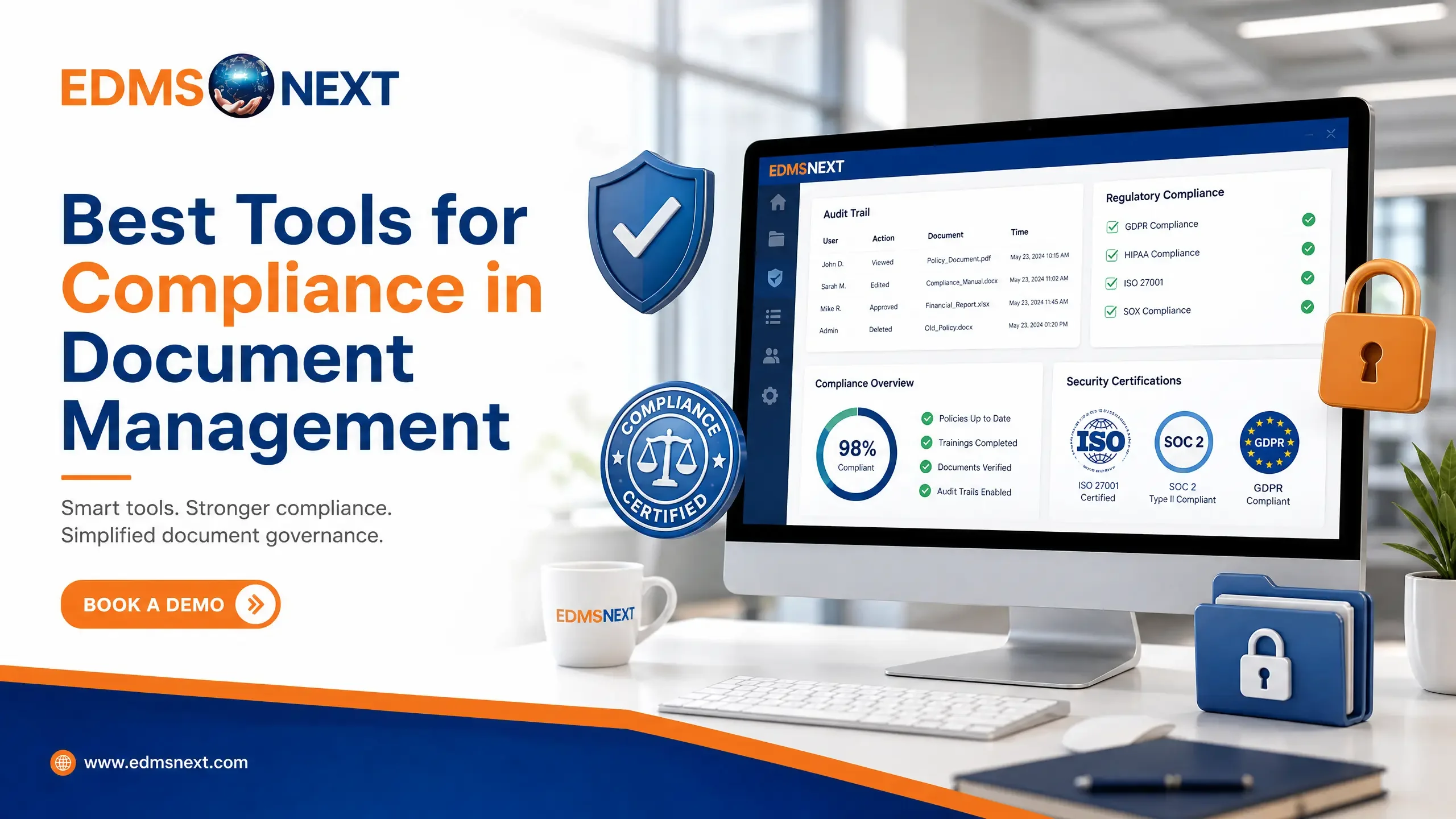
Audit trails record every document action including uploads, edits, approvals, downloads, and deletions. This improves accountability during compliance reviews and regulatory audits.
Businesses implementing top document management software features often prioritize audit visibility and workflow tracking.
According to TechTarget, audit tracking and centralized document governance significantly improve compliance management efficiency.
Role-Based Access Controls
Role-based permissions restrict document access based on departments, employee roles, and organizational policies.
Research from Microsoft Security highlights that identity and access management systems strengthen enterprise compliance and reduce security vulnerabilities.
Document Encryption
Encryption protects files during storage and transfer, reducing cybersecurity risks and unauthorized access.
According to AWS Security, enterprise encryption frameworks improve cloud security and compliance governance across digital infrastructure.
Automated Retention Policies
Retention management automatically archives or deletes files according to business rules and regulatory policies.
Workflow Automation
Workflow automation standardizes approvals, notifications, escalations, and document routing processes to improve compliance consistency.
According to Oracle Security, automated governance workflows improve operational transparency and reduce manual compliance risks.
OCR and Intelligent Search
OCR converts scanned files into searchable digital documents for faster retrieval, compliance reporting, and operational visibility.
Compare Compliance Tools in Document Management
| Compliance Tool | Business Benefit | Importance |
|---|---|---|
| Audit Trails | Supports compliance audits | High |
| Encryption | Protects sensitive data | High |
| Role-Based Permissions | Controls document access | High |
| Workflow Automation | Improves compliance consistency | High |
| Retention Policies | Supports legal requirements | High |
How EDMS Next Supports Compliance Management
EDMS Next combines workflow automation, secure cloud storage, OCR, audit tracking, enterprise search, and document governance into one compliance-ready platform.
The platform helps organizations automate approvals, secure sensitive files, maintain audit transparency, and improve enterprise compliance management.
Businesses across multiple industries use workflow automation to strengthen governance and improve operational visibility.
Key Compliance Capabilities
- Comprehensive audit trails: Track all document activities
- Encrypted document storage: Protect confidential business files
- Workflow automation: Standardize approvals and governance
- Role-based permissions: Restrict unauthorized access
- OCR and advanced search: Improve compliance reporting
Industries That Need Compliance-Focused Document Management
Healthcare organizations require HIPAA-ready systems for patient records and compliance reporting. Financial institutions rely on secure document governance for audits, contracts, and regulatory reporting workflows.
Legal firms manage confidential documentation while HR departments secure onboarding records, payroll files, and policy documentation.
Businesses evaluating deployment strategies often explore EDMS Next FAQs to understand integrations, workflow automation, and compliance capabilities.
How to Choose the Right Compliance Tool
1. Identify Regulatory Requirements
Understand which standards apply to your organization including GDPR, HIPAA, ISO, or internal governance requirements.
2. Evaluate Security Features
Look for encryption, permissions management, audit trails, and secure cloud infrastructure.
3. Prioritize Workflow Automation
Automation improves consistency while reducing manual compliance risks.
4. Consider Scalability
The platform should support increasing document volumes and enterprise growth.
5. Request a Product Demo
Organizations interested in enterprise compliance workflows can request a demo to evaluate automation and governance capabilities.
Conclusion
The best tools for compliance in document management help businesses secure sensitive information, maintain audit readiness, automate workflows, and strengthen operational governance.
Platforms like EDMS Next combine encrypted storage, OCR, workflow automation, compliance tracking, and enterprise collaboration into one scalable document management solution.
As businesses continue investing in digital transformation and regulatory readiness, compliance-focused workflow automation is becoming essential for enterprise security and operational efficiency.
To learn more about enterprise document governance solutions, contact EDMS Next or explore document management solutions in the USA.
Frequently Asked Questions About Compliance in Document Management
What is compliance in document management?
Compliance in document management refers to securely managing business documents according to legal, regulatory, and organizational standards.
Why are audit trails important?
Audit trails track document activity and improve transparency during audits and compliance reviews.
How does workflow automation improve compliance?
Workflow automation standardizes approvals and reduces manual compliance risks across business processes.
What industries require compliance-focused document management?
Healthcare, finance, HR, legal, manufacturing, and enterprise businesses commonly require compliance-ready document management systems.
Can document management software support GDPR and HIPAA?
Yes. Many enterprise platforms include features designed to support GDPR, HIPAA, and industry-specific compliance standards.

