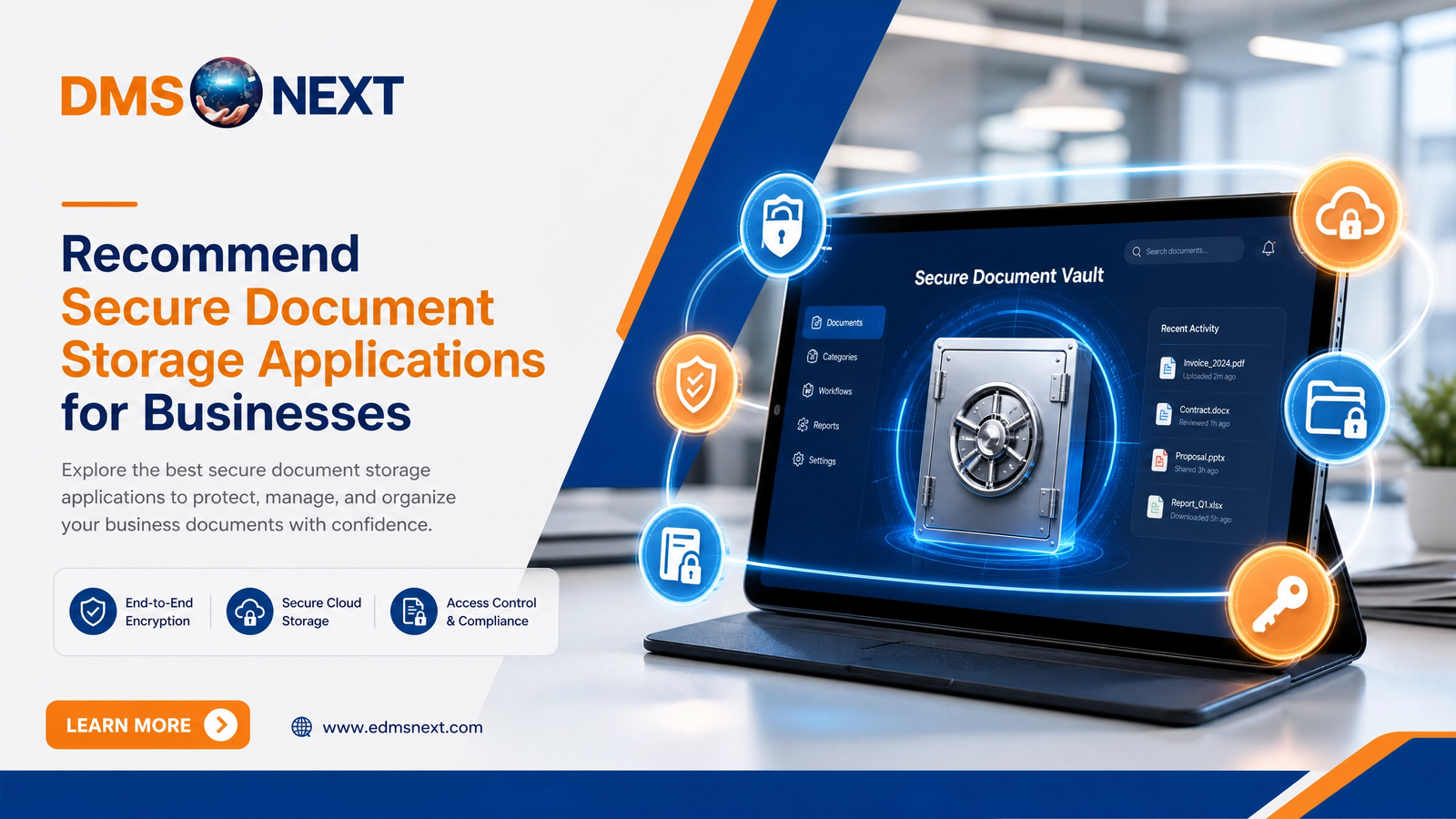
Recommend Secure Document Storage Applications for Businesses Businesses handle large volumes of sensitive files every day including contracts, invoices, employee records, financial documents, compliance reports, and customer data. Without secure document storage applications, organizations face security risks, compliance issues, and operational inefficiencies. Modern document storage solutions combine encryption, cloud accessibility, workflow automation, role-based permissions, and compliance tracking into centralized enterprise platforms. Companies evaluating document management vendor solutions increasingly prioritize data security, accessibility, and operational scalability. This guide recommends secure document storage applications, explains important security features, and helps businesses choose the right enterprise document management solution. What Are Secure Document Storage Applications? Secure document storage applications are software platforms designed to store, organize, protect, and manage digital business files securely. These systems use encryption, access controls, audit logs, and automated workflows to protect sensitive documents from unauthorized access. Modern enterprise platforms also improve collaboration, document retrieval, compliance management, and workflow automation across departments. According to IBM, enterprise data security solutions help organizations reduce cyber risks while improving operational control over sensitive information. Why Businesses Need Secure Document Storage Software Traditional file storage systems create security vulnerabilities, compliance challenges, and collaboration limitations. Secure cloud-based document management systems solve these issues while improving operational efficiency. Enhanced document security: Encryption protects sensitive business information Improved collaboration: Teams access files securely from centralized platforms Regulatory compliance: Audit trails and permissions support governance requirements Faster document retrieval: OCR and search capabilities improve accessibility Reduced operational risks: Centralized systems minimize document loss and duplication Tip: Businesses handling legal, healthcare, HR, or financial records should prioritize enterprise-grade security and compliance features. Features to Look for in Secure Document Storage Applications End-to-End Encryption Encryption protects documents during storage and transfer, ensuring sensitive files remain secure against unauthorized access. Role-Based Permissions Role-based access controls restrict who can view, edit, share, or download documents within the organization. Organizations implementing top document management software features often prioritize permissions management and advanced security controls. Cloud-Based Accessibility Cloud document management systems improve remote collaboration while maintaining centralized security controls. According to AWS Security, cloud security frameworks improve scalability, monitoring, and secure remote access for enterprise systems. OCR and Intelligent Search OCR converts scanned files into searchable digital documents, improving retrieval speed and operational efficiency. Compliance and Audit Trails Audit logs track every document action including edits, downloads, approvals, and access history to support regulatory compliance. Workflow Automation Workflow automation improves document approvals, routing, notifications, and operational consistency. Compare Secure Document Storage Applications Platform Best For Key Security Feature Deployment EDMS Next Enterprise document security Workflow automation & compliance Cloud & On-Premise Dropbox Business File sharing Encrypted cloud storage Cloud Google Drive Enterprise Collaboration Access management Cloud Box Enterprise Compliance-heavy industries Governance controls Cloud OneDrive Business Microsoft ecosystem Enterprise encryption Cloud How EDMS Next Improves Enterprise Document Security EDMS Next combines secure document storage, workflow automation, OCR, compliance tracking, cloud accessibility, and enterprise collaboration into one centralized platform. The platform helps organizations manage digital records securely while improving operational efficiency and regulatory compliance. Businesses across multiple industries use document workflow automation to improve security, reduce operational bottlenecks, and centralize enterprise document management. Key Capabilities Encrypted document storage: Protect sensitive business files Workflow automation: Improve approvals and routing OCR and advanced search: Retrieve documents instantly Role-based permissions: Secure access controls Compliance tracking: Maintain audit-ready document histories Industries That Need Secure Document Storage Healthcare organizations use secure document management systems for patient records and compliance documentation. Financial institutions protect invoices, contracts, and audit records using encrypted storage systems. Legal firms manage confidential case files, while HR departments secure employee onboarding and payroll records digitally. Businesses exploring enterprise deployment strategies often review EDMS Next FAQs to understand integrations, workflow capabilities, and security features. How to Choose the Right Secure Document Storage Application 1. Evaluate Security Features Look for encryption, access controls, audit logs, and compliance certifications. 2. Prioritize Workflow Automation Workflow automation improves operational consistency while reducing manual approvals. 3. Review Integration Capabilities Choose software that integrates with ERP, CRM, HRMS, and cloud collaboration tools. 4. Consider Scalability The platform should support increasing document volumes and organizational growth. 5. Request a Product Demo Businesses interested in enterprise document security can request a demo to evaluate workflow automation and secure document storage capabilities. Conclusion The best secure document storage applications help businesses protect sensitive information, automate workflows, improve compliance, and centralize enterprise document management. Platforms like EDMS Next combine encrypted storage, workflow automation, OCR, audit tracking, and cloud accessibility into one scalable enterprise solution. As businesses continue investing in digital transformation and cloud infrastructure, secure document storage is becoming essential for operational efficiency and enterprise security. To learn more about secure enterprise document management solutions, contact EDMS Next or explore document management solutions in the USA. Frequently Asked Questions About Secure Document Storage Applications What are secure document storage applications? Secure document storage applications are software platforms that protect, organize, and manage digital business files securely using encryption and access controls. Why is encrypted document storage important? Encryption protects sensitive business information from unauthorized access, cyber threats, and data breaches. Can document storage software improve compliance? Yes. Enterprise platforms provide audit trails, permissions management, version tracking, and secure file access for compliance support. What industries use secure document storage systems? Healthcare, finance, legal, HR, manufacturing, and enterprise organizations commonly use secure document storage applications. Does secure document management software support workflow automation? Most enterprise platforms combine secure storage with workflow automation, approvals, notifications, and document routing.

