Document Access Control — EDMSNext
Document access control is a security mechanism that restricts who can view, edit, share, or approve documents within an organization. The EDMSNext Document Access Control System allows businesses to manage user permissions, protect sensitive documents, and ensure that only authorized users can access critical information.
Organizations store many sensitive documents such as contracts, financial reports, HR files, and compliance records. However, when documents are accessible to everyone, organizations face risks such as data leaks, unauthorized changes, and compliance violations.
Therefore, organizations implement document access control systems to protect confidential information and maintain document security.
The EDMSNext Document Access Control System helps organizations manage document permissions effectively while maintaining transparency and accountability.
If you want to explore other capabilities of enterprise document management platforms, visit our guide on top document management software features.
Why Document Access Control Is Important
In modern organizations, employees collaborate on documents across departments and locations. However, not every user should have full access to every document.
Document access control ensures that the right people can access the right documents at the right time.
- First, access control protects confidential documents
- Next, it prevents unauthorized document modifications
- In addition, role-based permissions improve document governance
- Furthermore, access logs maintain accountability
- Finally, organizations maintain stronger data security
Many industries require strict access control to protect sensitive information and comply with regulations. You can explore sector-specific implementations on our industry solutions page.
How the EDMSNext Document Access Control System Works
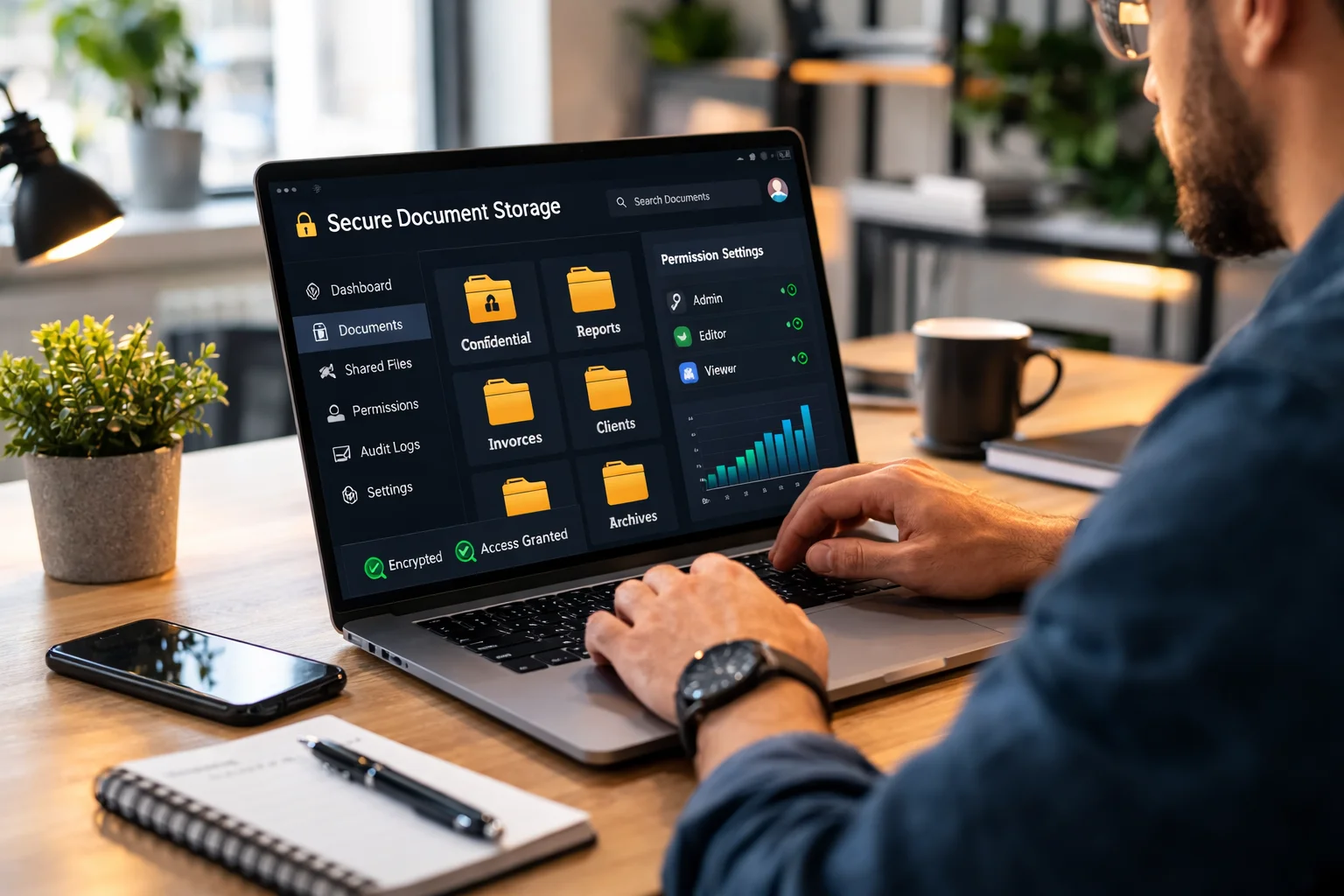
The EDMSNext platform provides advanced access control features that allow administrators to manage user permissions across the document repository.
User Authentication
First, users must authenticate their identity before accessing the system.
Role-Based Access Permissions
Next, administrators assign roles such as viewer, editor, reviewer, or approver to control document access.
Document-Level Permissions
The system allows administrators to restrict access to specific documents or folders.
Access Activity Tracking
EDMSNext records document access activities to maintain transparency and accountability.
Secure Document Sharing
Finally, authorized users can share documents securely without compromising document security.
To understand how organizations implement document workflows, explore our document management use cases.
Key Features of EDMSNext Document Access Control
Role-Based Permission Management
Administrators can define user roles and assign document permissions based on job responsibilities.
Granular Access Restrictions
Document access can be restricted at the document, folder, or department level.
Access Logs and Activity Tracking
The system records all document access activities, helping organizations maintain accountability.
Secure Document Sharing
Authorized users can share documents with colleagues or external partners securely.
Compliance-Ready Document Security
EDMSNext supports document security standards used by regulated industries.
Industries That Use Document Access Control Systems
Access control systems are essential for organizations that handle sensitive or confidential information.
- Pharmaceutical and life sciences organizations
- Healthcare providers and hospitals
- Manufacturing companies
- Engineering and construction firms
- Financial and legal institutions
EDMSNext supports organizations across multiple regions. Explore our service coverage through our locations pages.
Document Access Control vs Traditional File Permissions
- First, traditional file systems offer limited permission controls
- However, access control systems provide role-based permissions
- As a result, organizations improve document security
- In addition, access logs improve transparency
- Therefore, organizations maintain better document governance
Summary: Document access control helps organizations protect sensitive documents by restricting access to authorized users. EDMSNext provides role-based permissions, secure document sharing, and access tracking to improve enterprise document security.
Why Organizations Choose EDMSNext
Organizations require reliable tools to manage document security and protect sensitive information. Therefore, many enterprises choose EDMSNext for document access control.
- Advanced role-based document permissions
- Granular document access restrictions
- Secure document sharing capabilities
- Access activity monitoring
- Scalable enterprise document management platform
Learn more about our platform on our about us page.
Frequently Asked Questions
What is document access control?
Document access control is a system that restricts document access based on user roles and permissions.
Why is document access control important?
Document access control protects sensitive information and prevents unauthorized users from accessing confidential documents.
How does EDMSNext manage document permissions?
EDMSNext allows administrators to assign role-based permissions and control document access at multiple levels.
Which industries use document access control systems?
Industries such as healthcare, pharmaceuticals, manufacturing, engineering, and finance rely on document access control systems.
Can access control improve document security?
Yes, document access control improves document security by ensuring that only authorized users can view or modify documents.
Get Started with EDMSNext
You can read more document management insights on our blog.
If you want to see how EDMSNext can improve document security, you can book a demo or contact our team.
Follow EDMSNext for enterprise document management insights on LinkedIn.

